Compare
A terminal proves
a payment happened.
That is the whole difference, and it is worth being precise about. A terminal is a very good machine for taking money at a fixed counter. Away from that counter it becomes a logistics problem that still cannot tell you who was holding it.

Side by side
Where each one is actually better
If your work happens at a busy till, a terminal is probably the right answer and we will say so. This page is about everywhere else.

Where a terminal wins
At a busy till, dedicated hardware is simply the better tool
We will say so. This page is about everywhere else — which, for most businesses with people in the field, is nearly everywhere.
The arithmetic
What a distributed fleet costs in hardware alone
Move the sliders to your own numbers. This models only the hardware side — the part you already have quotes for.
Terminal hardware, per year
₹1,54,500
- Rental · 25 × ₹500 × 12₹1,50,000
- Redeploy & recover · 5 moves₹4,500
On TapProof
₹0
Of hardware. The phones are already in your people’s pockets. Your acquirer’s transaction rate and our per-device software fee are separate, quoted to you in writing, and deliberately not guessed at here.
The logistics that vanish
The hidden bill
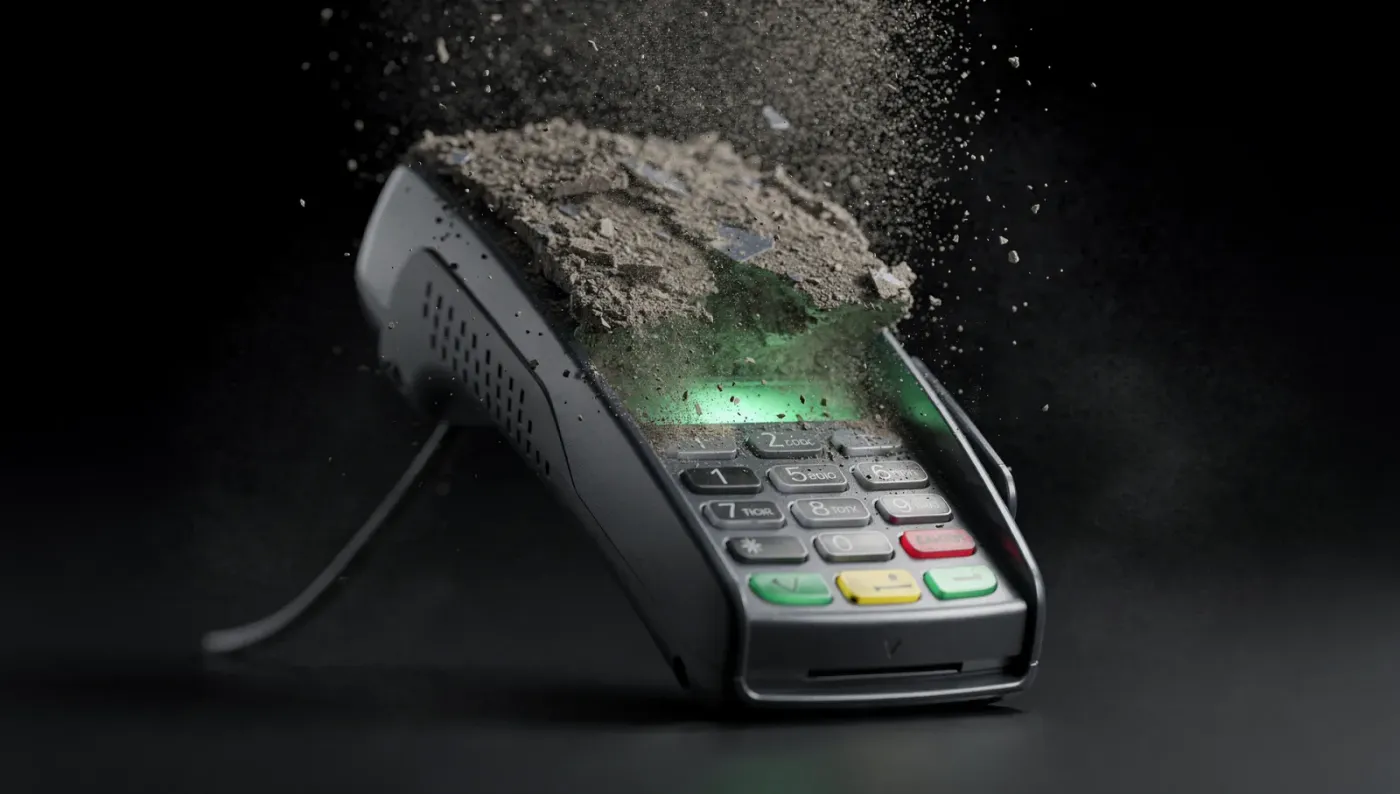
A terminal fleet is a logistics operation
Every acceptance point is a device to buy or rent, ship, configure, charge, repair, and chase back when someone leaves.
None of that appears on a rate card, and all of it appears in your operating costs. The phones your people already carry have none of it.
Being fair
Where a terminal still wins
A comparison page that finds no merit in the alternative is an advertisement, not a comparison.

A busy fixed counter

PIN above the ceiling